Research Area 3
Why might people tolerate selfish or self-serving behavior by their leaders? Self-serving leadership often negatively impacts followers. Yet, followers do not always respond by rejecting the leader. The present research demonstrates how, why, and when followers support self-serving leaders.
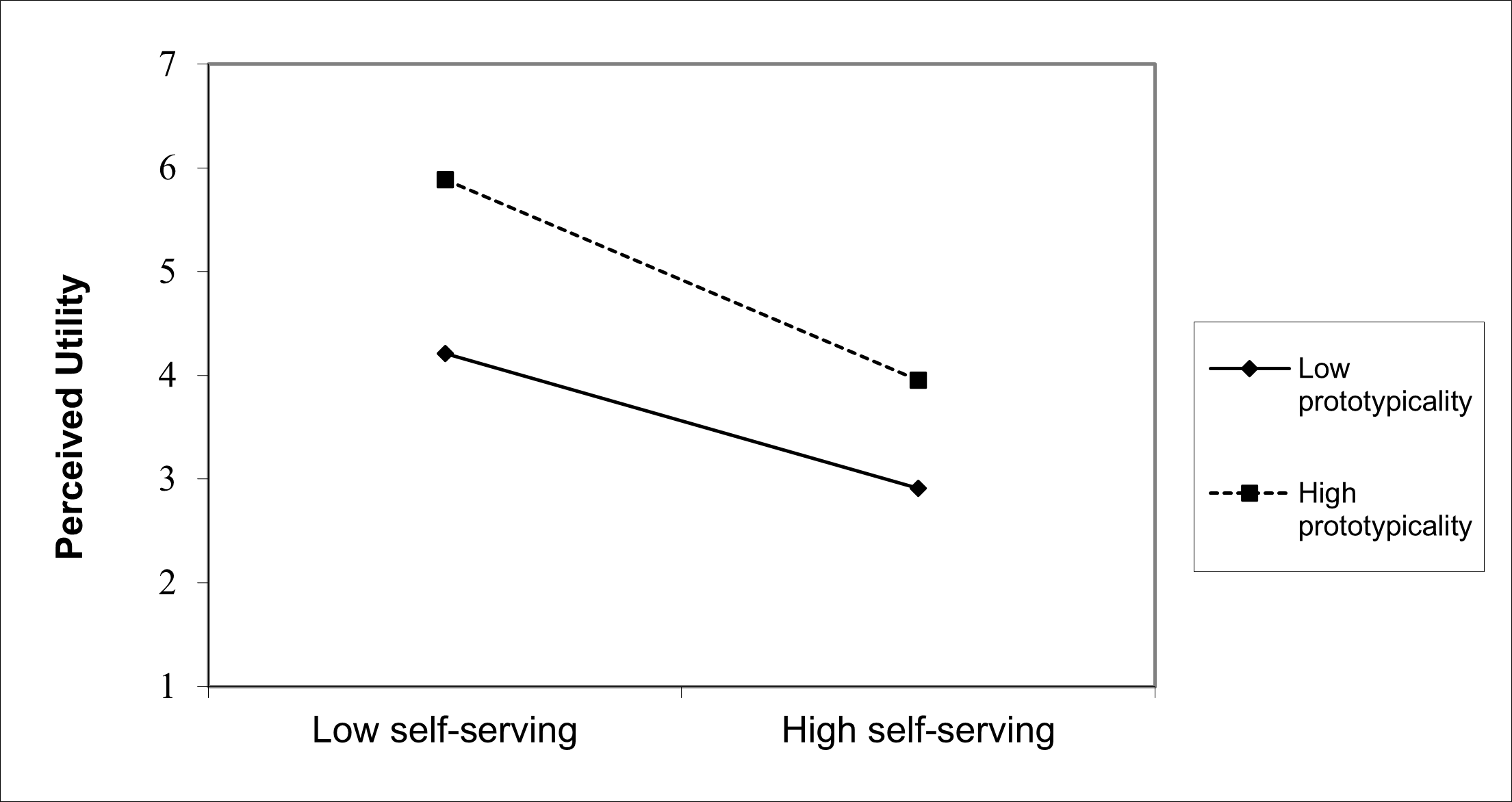
Method: Participants read a vignette of a fictional team leader “Taylor” who was depicted to either be a typical (i.e, prototypical) member of the group or untypical member (i.e., non-prototypical). They then rated how much they expected to benefit from following this leader (i.e., perceived utility), followed by a measure of perceived leader effectiveness.
Results: Leader prototypicality has a buffering effect on negative impressions of a self-serving leader. Highly prototypical leaders receive a degree of latitude from their followers in terms of an implicit belief that the leader cares about the group, which stretches to encompass self-serving leader behavior that does not support those implicit beliefs. In other words, followers make inferences of expected benefit based on leader prototypicality, which in turn influence follower impressions of the leader.